
Could Rhône Save 2026?
Words by Johnny Andrews, Contributing Writer
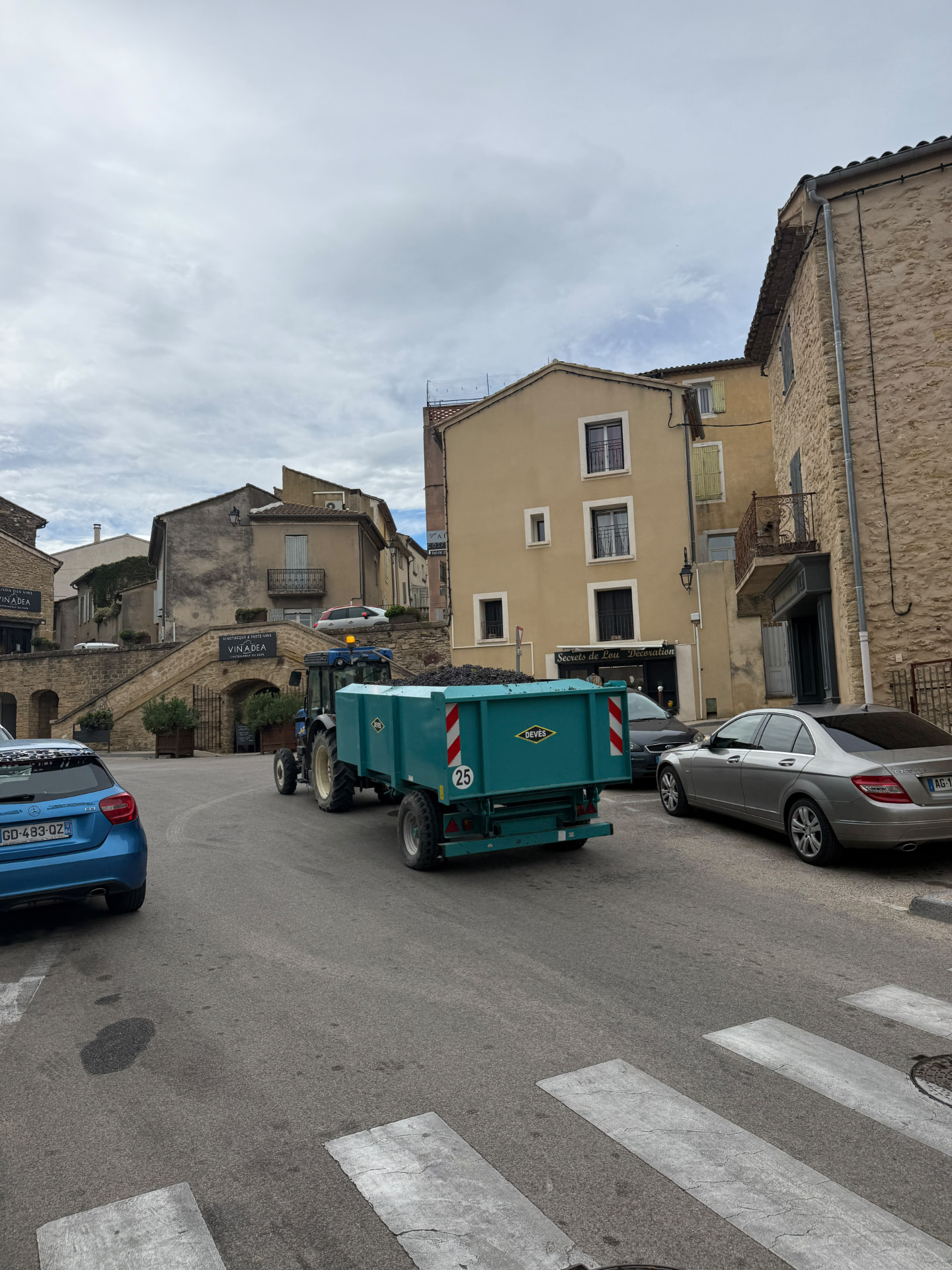
It has been difficult to escape the bad news surrounding the 2026 French harvest.
The heat came early, stayed for weeks and pushed the vine cycle forward at extraordinary speed. Across France, the harvest is expected to be one of the smallest of the past 30 years, with national production forecast to be around 17% below the 2021-25 average. Champagne, one of the most talked-about examples in recent weeks, is expecting a crop roughly half the size of last year's.
The headlines have therefore been predictable: heat, drought, early harvests, tiny berries and low yields. However, perhaps we should be looking at Châteauneuf-du-Pape a little differently.
There is no question that 2026 is extraordinary. The growing season has progressed at record speed. As early as June, models were predicting a Grenache harvest two days ahead of the previous record for precocity, set in 2022. In isolation, that sounds alarming. Perhaps, however, the more important question is not how early the harvest is, but what arrived at the winery. In this case, the early whispers are surprisingly encouraging.
Having spent time in Châteauneuf last week, visiting producers during the harvest, several were excited by what they were seeing. Reports of good concentration alongside surprisingly good volume are particularly encouraging, because that is not necessarily what you would expect after a summer of such intensity.
There is a misleading temptation to treat heat as a universal negative for wine. A vineyard in Champagne and a vineyard in Châteauneuf-du-Pape are not playing the same game.
Champagne's 2026 harvest is a fascinating example. The region has suffered a major reduction in yield following frost and heat, yet the Comité Champagne is simultaneously describing the fruit as exceptionally healthy, ripe and potentially capable of producing outstanding wines. Even in one of the regions most affected by the heat, the story is already more complicated than simply hot equals bad.
In Châteauneuf, the argument for optimism may be even stronger. This is an appellation built around sunshine. Its old vines, deep soils and Mediterranean varieties have evolved in a climate where heat and drought are not unusual events, but part of the natural environment. The crucial question is whether the vines had enough water to cope and so far, there are reasons to think they did.
Winter and spring rainfall helped build reserves before the extreme summer arrived, and reports from some vineyards suggest the vines have come through the heat in considerably better condition than the headlines might have suggested.
Grenache may be the key. The variety is perfectly capable of thriving in hot conditions, producing extraordinary perfume, texture and concentration when the circumstances are right. Early reports suggest healthy fruit, good concentration and, importantly, respectable volumes. When we first started thinking about 2026, the obvious concern was that a vintage this hot would mean dramatically reduced yields.
It is still far too early to know whether that is exactly what 2026 will deliver, but the early signs are certainly encouraging. There is a broader point here. 2026 is being discussed in France almost entirely through the lens of climate extremes, and understandably so. However, vintage conditions do not affect every appellation in the same way. What is a major challenge in a cool northern region can sometimes be much less problematic, or even beneficial, in a naturally hot southern one.
Châteauneuf-du-Pape has spent centuries learning how to deal with heat. The 2026 vintage has pushed that ability to the limit, but if the early whispers are correct, the vines may have responded remarkably well.
Early maturity, healthy fruit, concentration and surprisingly good volume are a very different proposition from the difficult vintage that might have seemed inevitable in the middle of the summer.
It is far too early to be making any big judgments on the 2026 vintage, but for now, at least, the early signs from Châteauneuf-du-Pape give us reason to be optimistic.
If you are in the market for Southern Rhône, take a look at our Gigondas and Terra Unique.
Back to the journal